_edited.png)


Building a Strong Fleet Safety Culture with Telematics
- Betty Rafallo

- Jun 16
- 3 min read
Fleet safety isn't built through policies alone.
While driver handbooks, safety meetings, and training programs all play an important role, the strongest fleet safety cultures are created when safety becomes part of everyday operations.
That's where telematics can make a significant difference.
Modern telematics solutions provide fleet managers with visibility into driver behavior, vehicle performance, and operational risks. More importantly, they provide the data needed to turn safety from a reactive process into a proactive one.
Let's explore how telematics helps organizations build and sustain a stronger fleet safety culture.
What Is a Fleet Safety Culture?
A fleet safety culture is the collection of attitudes, behaviors, and practices that influence how safety is prioritized throughout an organization.
In fleets with a strong safety culture:
Drivers understand safety expectations.
Managers consistently reinforce safe behaviors.
Risks are identified early.
Coaching is ongoing.
Safety is viewed as a shared responsibility.
Safety becomes part of daily decision-making rather than something discussed only after an incident occurs.

Moving from Reactive to Proactive Safety
Historically, many fleets addressed safety issues only after accidents, complaints, or violations occurred.
Telematics changes that approach.
With real-time visibility into fleet operations, managers can identify trends before they become serious problems.
Examples include:
Frequent speeding events
Harsh braking
Rapid acceleration
Excessive idling
Distracted driving indicators
Seatbelt compliance issues
Instead of reacting to incidents, fleets can proactively address behaviors that may contribute to future risk.
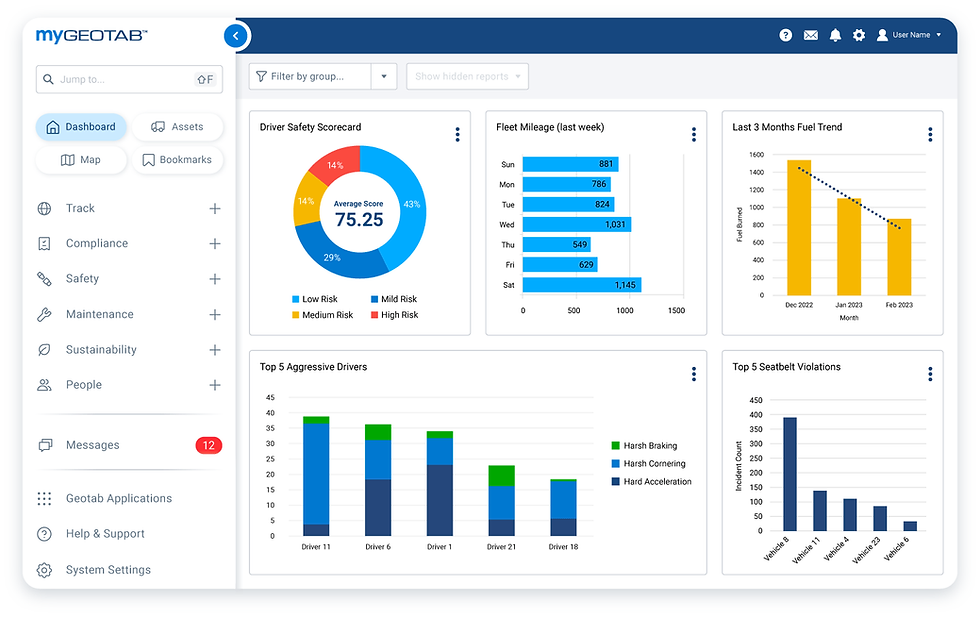
Creating Accountability Through Visibility
One of the biggest challenges in fleet management is maintaining consistency across drivers, vehicles, and locations.
Telematics provides objective data that helps establish accountability.
When drivers understand:
What is being measured
Why it matters
How performance is evaluated
they are often more engaged in improving their habits.
The goal isn't to monitor every action. It's to create transparency and provide meaningful feedback that supports safer operations.
Supporting Driver Coaching and Development
Data alone doesn't improve safety.
The real value comes from using telematics insights to support coaching conversations.
Effective coaching programs help drivers:
Understand specific behaviors that increase risk
Identify opportunities for improvement
Track progress over time
Receive recognition for safe performance
When coaching is based on objective data rather than assumptions, discussions become more productive and actionable.
Drivers gain clarity, and managers gain confidence in the coaching process.

Recognizing and Rewarding Safe Driving
A strong safety culture isn't only about correcting unsafe behavior. It's also about celebrating positive performance.
Many fleets use telematics data to recognize drivers who consistently demonstrate safe driving habits.
Recognition programs may include:
Monthly safety awards
Driver scorecards
Incentive programs
Public acknowledgment of achievements
Positive reinforcement helps encourage long-term behavioral change and promotes a culture where safety is valued.
Using Dash Cameras to Enhance Safety Programs
AI-powered dash cameras can provide additional context beyond telematics data alone.
Video insights help fleets:
Understand what happened during safety events
Identify coaching opportunities
Protect drivers from false claims
Improve incident investigations
When used appropriately, dash cameras support driver development rather than punishment.
Combined with telematics, they provide a more complete picture of fleet safety performance.

Leadership's Role in Safety Culture
Technology is an important tool, but leadership remains essential.
Successful fleet safety programs require:
Consistent communication
Clear expectations
Ongoing coaching
Management support
Commitment from every level of the organization
Telematics provides the visibility. Leadership provides the direction.
Together, they help create an environment where safety becomes a shared priority.
The Long-Term Benefits of a Strong Safety Culture
Organizations that prioritize safety often experience benefits beyond accident reduction.
A strong fleet safety culture can contribute to:
Fewer incidents and claims
Lower operational risk
Reduced maintenance costs
Improved driver retention
Stronger customer confidence
Better overall fleet performance
Over time, safety becomes more than a compliance requirement—it becomes a competitive advantage.
Final Thoughts
Building a strong fleet safety culture doesn't happen overnight.
It requires consistent effort, ongoing communication, and access to reliable operational data.
Telematics helps make that process easier by providing the visibility needed to identify risks, coach drivers, recognize achievements, and support continuous improvement.
The most successful fleets don't use telematics simply to track vehicles. They use it to build safer, more accountable, and more efficient operations.
Ready to Strengthen Your Fleet Safety Program?
Can-Am Telematics helps fleets improve visibility, driver safety, and operational performance through advanced telematics and video safety solutions.
Contact our team today for a free fleet audit or personalized demo to learn how telematics can support a stronger safety culture across your fleet.


Comments