_edited.png)


Earth Day 2026: 5 Ways Your Fleet Can Go Green Without Going Broke

Sustainability in fleet management often gets misunderstood as an added expense. In reality, the most effective environmental strategies are also the most cost-efficient.
Earth Day is a reminder that reducing emissions and improving operational performance can go hand in hand. With telematics platforms like Geotab, fleets already have the data needed to make smarter, greener decisions without increasing overhead.
This is not about spending more to go green. It is about saving more by operating smarter.
Here are five practical, data-driven ways your fleet can improve sustainability in 2026.
Reduce Idle Time to Cut Fuel Waste Immediately
Idle time is one of the most avoidable sources of fuel consumption and emissions.
Even a few minutes of unnecessary idling per vehicle adds up quickly across an entire fleet. Telematics data allows you to identify:
• Vehicles with the highest idle duration
• Locations where idling frequently occurs
• Driver patterns contributing to excess fuel use
By setting idle thresholds and coaching drivers based on real data, fleets can reduce fuel waste without changing routes or operations.

Improve Route Efficiency Using Real Trip Data
Smarter routing is one of the fastest ways to reduce emissions without changing fleet size or vehicle investment.
Telematics systems help analyze:
• Most frequently used routes
• Trip duration vs distance efficiency
• Traffic pattern delays
• Unauthorized detours
Optimizing routes reduces unnecessary mileage, which directly lowers fuel consumption and emissions output.
Small adjustments in routing can create significant annual savings across a fleet.

Monitor Tire Pressure to Improve Fuel Economy
Underinflated tires are often overlooked but have a direct impact on fuel efficiency and vehicle wear.
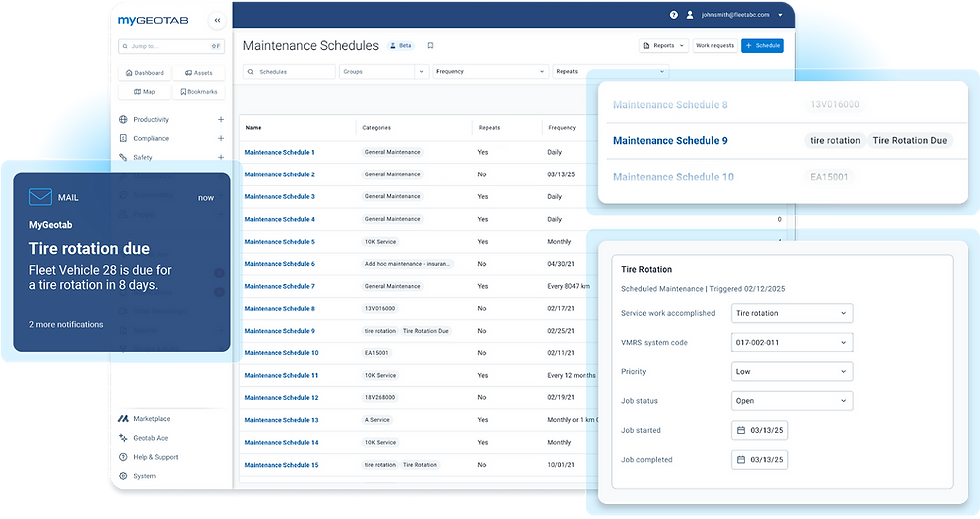
With integrated telematics and maintenance alerts, fleets can track:
• Tire pressure anomalies
• Maintenance schedules tied to tire performance
• Fuel usage increases linked to vehicle condition
Proper tire maintenance improves fuel economy and extends tire lifespan, reducing both cost and environmental impact.

Use Predictive Maintenance to Prevent Wasteful Breakdowns
Reactive maintenance is expensive and inefficient. Predictive maintenance uses telematics data to identify issues before they become serious.
Key indicators include:
• Engine fault codes
• Battery health alerts
• Fluid level inconsistencies
• Engine performance trends
Preventing breakdowns reduces emergency service calls, towing emissions, and unnecessary part replacements.
This is where sustainability and cost savings align most clearly.
Track Emissions Through Operational Data
You cannot improve what you do not measure.
Modern telematics platforms like Geotab allow fleets to estimate and track emissions based on:
• Fuel consumption
• Engine idling time
• Trip distance and efficiency
• Vehicle utilization
Having emissions visibility helps fleets set realistic sustainability goals and demonstrate environmental responsibility without additional reporting overhead.

Green Savings, Not Green Spending
The most effective sustainability strategies are not about new investments. They are about optimizing what already exists.
Idle reduction, smarter routing, tire maintenance, predictive servicing, and emissions tracking all share one thing in common: they improve both environmental and financial performance.
This is the core principle of modern fleet sustainability. Less waste means lower cost.
If you want to identify where your fleet is currently losing fuel, efficiency, or emissions control opportunities, Can-Am Telematics offers a complimentary fleet sustainability and performance review. Our team can help translate your telematics data into actionable savings strategies.
Request a free fleet audit or schedule a live demo to see how your fleet can go greener without increasing costs.


Comments